Enhancing Lives With Advanced Assistive Devices for the Blind
The integration of sophisticated assistive gadgets for the blind is transforming how people experience their environments and engage with their neighborhoods. Advancements such as increased reality clever glasses and innovative electronic travel help not just assist in navigation but also enhance general high quality of life. These innovations foster a sense of autonomy and self-efficacy among users, enabling them to carry out daily tasks with newly found self-confidence. However, the ramifications of these developments expand past simple performance; they challenge social understandings of disability and freedom. What does this evolution suggest for the future of assistive technology and its duty in encouraging individuals?

Introduction of Assistive Devices
Assistive devices for the blind include a diverse series of devices and technologies created to enhance independence and enhance the top quality of life for people with visual disabilities. These devices deal with different demands, from navigation and flexibility to interaction and everyday job administration.
One of the key groups of assistive gadgets includes movement help, such as white canes and guide pets, which help individuals browse their environments securely. Electronic traveling help, furnished with sensors and audio responses, additionally play a significant duty in mobility enhancement.
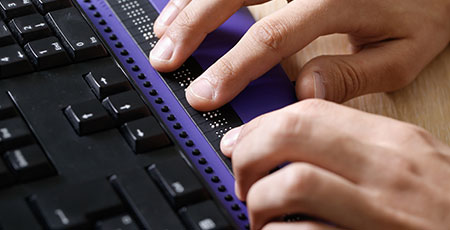
In addition, gadgets that aid with everyday living activities, such as flexible cooking area devices, Braille tags, and chatting watches, equip people to perform jobs individually. Communication help, consisting of display readers and Braille screens, help with access to info and make it possible for individuals to engage efficiently with the digital world.
Furthermore, low-tech services like magnifying glasses and large-print materials stay essential for many users. Collectively, these assistive devices offer not only as functional devices however also as crucial enablers of autonomy, cultivating greater participation in a globe that commonly prioritizes sighted experiences. Their combination right into day-to-day life is vital for promoting inclusivity and enhancing total well-being for those with aesthetic disabilities.
Innovative Technologies in Usage
Advancement in innovation has substantially changed the landscape of tools readily available for people with aesthetic impairments. Amongst the most noteworthy advancements are wise glasses integrated with augmented reality, which give real-time navigating aid and item recognition. These tools take advantage of advanced cams and expert system to provide acoustic signs, enhancing the individual's spatial understanding and autonomy.
Furthermore, mobile applications have actually become effective resources, enabling users to identify currency, reviewed text out loud, and browse unknown atmospheres with spoken instructions. Tools such as Braille screens and refreshable Braille gadgets continue to progress, offering smooth connection with computers and mobile phones, thus enhancing communication and access to details.
Wearable modern technology, consisting of smartwatches furnished with voice-activated features, further equips customers by facilitating fast access to notices and informs without calling for visual interaction. Responsive maps and 3D printing are likewise acquiring grip, using substantial depictions of areas that aid in orientation and wheelchair training.
Collectively, these cutting-edge modern technologies not only boost the everyday lives of visually impaired individuals yet additionally foster higher self-reliance, inclusivity, and engagement with the more comprehensive area, thus improving understandings of availability. (AI-powered visual aids)
Personal Stories of Empowerment
Empowerment usually arises from personal experiences that highlight the transformative effect of technology on people with aesthetic impairments. Take, for instance, the story of Sarah, a young artist who restored her enthusiasm for painting via the use of eye checkup near me a clever cane furnished with barrier discovery. This gadget not just facilitated her movement however instilled a newly found self-confidence, enabling her to browse public areas independently and pursue her imaginative undertakings.

These narratives highlight the profound effects that progressed assistive devices can carry life. By making it possible for people to overcome barriers, modern technology fosters a feeling of autonomy and self-respect. Such empowerment stories function as a testament to the potential of innovation, highlighting exactly how the right devices can significantly improve quality of life and open doors to new possibilities for those with aesthetic impairments.
Benefits of Advanced Solutions
The combination of cutting-edge innovation right into assistive tools significantly transforms everyday experiences for those impacted by vision loss. Mobility aids for visually impaired users. Tools such as smart walking sticks equipped with sensors, navigating applications, you can try these out and wearable technology are designed to supply real-time comments, enhancing spatial recognition and minimizing the risks linked with mobility.
Moreover, progressed assistive innovations promote social incorporation by facilitating interaction and interaction. Voice-activated devices and apps permit people to access information and involve with their surroundings separately, damaging obstacles that previously hindered their participation in instructional, expert, and social settings.
Furthermore, the customization and adaptability of these options accommodate the diverse needs of individuals, therefore boosting their general quality of life. Boosted functionality, such as things acknowledgment and text-to-speech abilities, equips people with visual problems to do jobs that they might have once located challenging. Inevitably, advanced assistive innovations not just enhance freedom and security however additionally promote dignity and self-respect, enabling customers to lead fulfilling lives.
Future Fads in Assistive Tech
As technology remains to progress, the landscape of assistive devices for the blind is poised for amazing developments that will further boost ease of access and independence. Emerging patterns in assistive innovation show a shift towards raised combination of expert system (AI) and machine knowing, making it possible for gadgets to adapt to specific user needs in real-time. These advancements are expected to facilitate even more instinctive navigating systems that can determine obstacles and give audio responses, dramatically improving outdoor flexibility.
Additionally, the growth of wearable technology, such as clever glasses outfitted with enhanced truth, will enable customers to obtain contextual info about their surroundings, thereby enhancing look here their spatial understanding. Advancements in haptic technology promise to create responsive responses gadgets, enabling individuals to perceive info with touch, boosting learning and interaction with their environment.
Telecommunication developments are additionally leading the way for remote aid solutions, where experienced professionals can provide advice via video calls, guaranteeing assistance is easily easily accessible. As these fads unravel, the future of assistive devices for the blind will undoubtedly foster higher autonomy, encouraging people to navigate their globe with confidence and simplicity.
Verdict
The assimilation of advanced assistive tools for the blind represents a considerable development in fostering independence and improving lifestyle. By using cutting-edge innovations, these tools empower individuals to browse their settings with greater confidence and autonomy. As the area remains to progress, ongoing research study and development will likely produce a lot more advanced services, additionally transforming the lived experiences of individuals with aesthetic problems and promoting a greater feeling of addition within culture.
The assimilation of innovative assistive gadgets for the blind is transforming exactly how individuals experience their environments and engage with their communities. The combination of sophisticated modern technology into assistive devices considerably changes everyday experiences for those affected by vision loss.As modern technology continues to advance, the landscape of assistive gadgets for the blind is poised for amazing advancements that will additionally boost access and freedom. Emerging patterns in assistive innovation indicate a shift toward increased assimilation of fabricated knowledge (AI) and maker learning, allowing tools to adjust to private customer requires in real-time.The assimilation of advanced assistive tools for the blind stands for a substantial improvement in cultivating freedom and improving quality of life.